
What Kind of Support Systems Are Actually Supportive?
An Evidence-Based, Trauma-Informed Guide for Survivors and Those Who Love Them
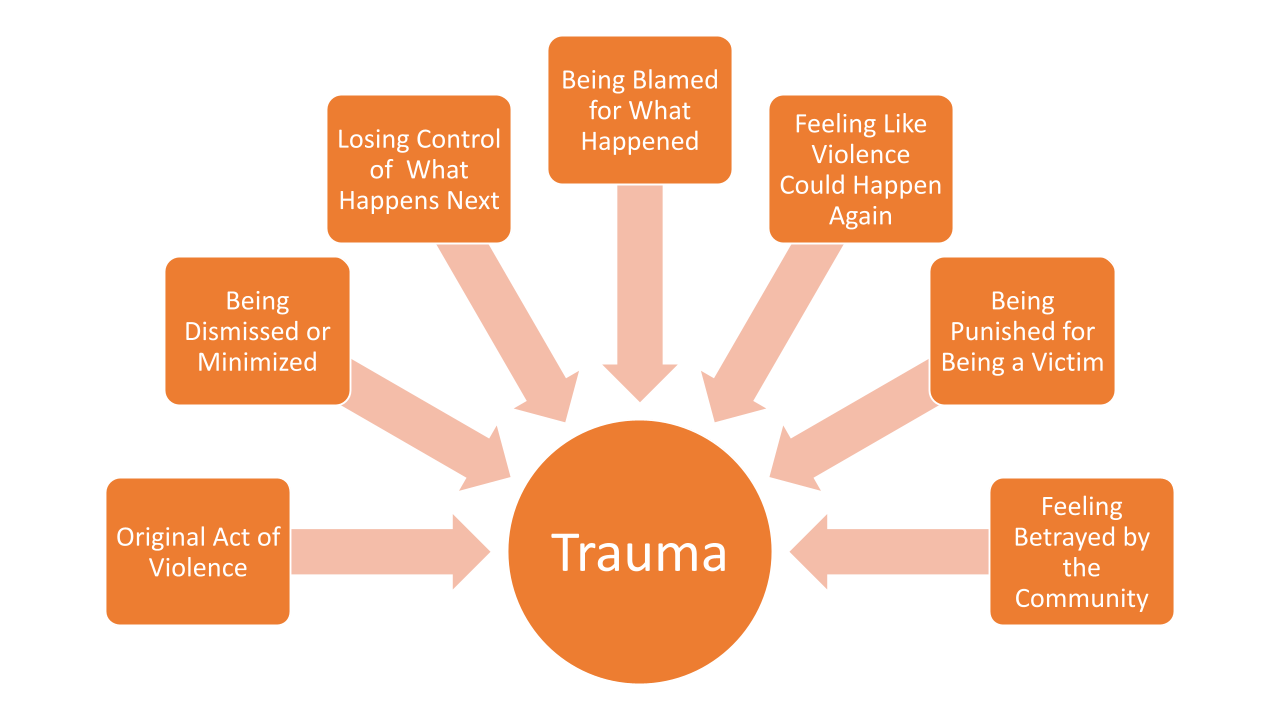
Sexual violence researchers have learned that the traumatic impact of sexual violence is shaped by everything that happens after it’s over. If survivors can regain their autonomy and receive the support they need, they literally experience less trauma. But if their attempts to seek help are rejected, then their trauma can compound. These types of secondary traumas are equally as traumatic as the original act of violence, leading some researchers to call them “the second rape.”
When survivors (and the people around them) don’t know about this second type of trauma, it can lead to a misdiagnosis of why survivors are struggling to heal. The problem might not only be lingering trauma from the original act of violence. Instead, it might also be trauma from the hurtful things friends, family, or institutions said or did. And if some of those hurtful things are still ongoing, it can make it impossible to heal because the traumatic events aren’t actually over yet. Or to put it another way, the survivor still needs support that is actually supportive.
In this guide, we’ll explore the types of support that researchers find survivors want in different types of settings from different types of people in their lives. We chose to center feminist anti-violence research as a way to include a lot of different survivors’ perspectives at once. In the footnotes, we’ll cite the most relevant studies that informed this guide.
Who We Are
We are sociologists who came into our work because we witnessed–in our personal and professional lives–the way a survivor’s world can unravel after sexual violence. Some of that unraveling comes from the trauma of the original act of violence, but as much or more comes from the way people and institutions in a survivor’s life treat them. A lot of the time, a survivor who is seeking help feels their life getting harder instead of easier. We became researchers because we wanted to better understand what was happening and why, as well as how we might be able to ease the burdens of sexual violence through offering survivors the real support they need and deserve.
Ultimately, we see our work as fundamentally optimistic. It’s the work of making sexual violence hurt less. It’s recognition that survivors have whole lives ahead of them that can be beautiful, fulfilling, joyful, and full of love.
How to Use This Guide
This guide is designed to be useful to survivors who are thinking about whether they are getting the types of support they need, but also for people who support survivors, including friends, family, and professional practitioners like therapists or victim advocates. It’s also designed to be helpful for anyone in a position of power within an institution who can make things easier for survivors like teachers or employers.
We also recognize there is overlap in those roles. A lot of practitioners are survivors themselves! And a big part of offering other people the kind of support they need is sorting through our own experiences with the support-seeking.
This guide is organized into two main sections: one focused on support from people (e.g., the kinds of interactionssurvivors need) and another focused on support from institutions (e.g., the kinds of structural supportsurvivors need). Some groups–like practitioners, educators, or employers–often act as individuals and institutions at the same time, so they are intended to be implemented together too.
The People in Our Lives
Sexual violence is primarily traumatic because it strips the victim of their bodily autonomy. When a survivor discloses their trauma to seek help, there is risk of retraumatization if the listener responds in a way that further undermines the survivor’s autonomy. Instead, survivors need supports that prioritize consent and allow a survivor to retain control over what happens next (1).
In a study, Nicole and her co-author Kathryn Holland analyzed the way first responders (i.e., people trained to be a survivor’s entry point into community resources) reacted to hypothetical disclosures of sexual violence from survivors. We identified four different types of reactions. Only one–an empowering response–prioritized survivors’ autonomy.
Centering Autonomy in Supporting Survivors (2)
Empowering (3)
Providing emotional support, offering tangible aid, and allowing the survivor to choose the kinds of support that are best
Empowering responses help survivors
Minimizing
Acting like the violence is “not that bad” or refusing to take action requested by the survivor
Minimizing responses hurt survivors
Controlling
Forcing a survivor to do what you think is best (e.g., calling the police, telling them to leave a violent relationship right away)
Controlling responses hurt survivors
Gatekeeping
Standing in the way of resources (e.g., prying for more details, requiring more info before making a referral)
Gatekeeping responses hurt survivors
Here are a few examples of what each of these kinds of reactions look like in response to sample scenarios. Remember–an empowering response is the only response that consistently facilitates a survivor’s healing.
Scenario 1
A survivor tells you that they were sexually assaulted by their partner, but that they are worried about seeking medical care because they are afraid that the police or ICE might be called.
-
“It doesn’t sound like it was really a sexual assault anyway. You can probably just work it out at home.”
“Your injuries don’t seem serious enough to me to need medical care. I think you’re overreacting.”
-
“You need to go to the hospital right now!”
“If you don’t call the police, he could do this to someone else. I’m going to call 911!”
-
“Tell me more about what happened to you. If I know more of the details, I’ll be able to decide how serious the violence is.”
-
“I hear your concerns and I want to help you figure out a way to get help that feels safe. Would you want to call a confidential crisis line together and see if they have any ideas about ways to get treatment without involving the police or ICE?”
A lot of the institutions that are supposed to help survivors hurt them instead (4) – and that’s especially true for survivors of color (5). It is common–and often protective!–for survivors to be wary of specific institutions that they know have a history of retraumatizing people from their community. Survivors should always be allowed to decide which institutions they involve in the aftermath of violence. They also should be able to get help assessing the safety of institutions from trusted people in their lives and learning about institutions that have taken demonstrable steps to be safer.
The empowering response is helpful because it respects the decisions the survivor has already made (i.e., avoiding institutions that may involve the police or ICE) while also offering tangible help for the problem the survivor identified (i.e., assisting the survivor in seeking out new information about safe ways to access medical care). The empowering response also gives the survivor control over future decision-making processes that may take place after getting more information.
Scenario 2
A family member tells you that she experienced something violent from someone else in the family, but she hasn’t used a specific label like “sexual assault” or “domestic violence.” The only thing she is certain about is that she doesn’t want to see the family member who hurt her for a while.
-
“If you don’t know how to label it, but it sounds like it wasn’t really a big deal. Maybe you should just let it go. I don’t think he meant any harm and he’s a part of the family too.”
“You know the stereotypes people have about men in our community. Your experience isn’t that bad, so you shouldn’t be saying things that will make people believe those stereotypes are true.”
-
“This is domestic violence! You need to report it!”
“You’d better not involve the police because you know how that can make our community look.”
-
“Tell me more about what happened to you. If I know more of the details, I’ll be able to decide whether or not I’m going to invite him to the big family party coming up.”
“I’m going to talk to [the perpetrator] and hear his side of the story before I decide what to do.”
-
“It makes sense that you would want space after what happened. I won’t involve anyone else in the family without your permission, but I promise that I won’t invite him to anything I host to make sure you feel comfortable coming. If you want, I can help you talk to other people in the family you trust too.”
“I know that other people who have had experiences like this have benefited from accessing a resource I know about. Would you want me to send you a link to a culturally specific gender based violence website (like metoomovement.org)?”
Most sexual violence is perpetrated by acquaintances, which can lead a lot of bystanders who know all involved parties to prioritize the broader community (including the perpetrator) over the victim’s safety. This is a hurtful response that reinforces the notion that the survivor is the least valuable member of the community. When this takes place in communities of color, Jennifer Gómez, professor and sociologist, found it could cause cultural betrayal (6), which exacerbates the survivor’s trauma. In cultural betrayal, the broader oppression of white supremacy makes a survivor more reliant on their own safe communities and it is additionally traumatic when violence is treated as acceptable within the spaces that were previously seen as a refuge from the violence of racism.
In this scenario, the empowering responses are helpful because they allow the survivor to retain agency over how they label what happened to them (including not labeling the violent event at all), as well as receive validation of their importance to the listener and access help for their immediate needs (i.e., space). The second response also connects the survivor to culturally specific resources that are more likely to understand the ways racism and sexism intersect for women of color experiencing violence within their own family.
Remember–the components of an empowering response are offering emotional support and tangible aid while prioritizing a survivor's autonomy by allowing them to retain control over what happens next.
People in Our Lives Reflection Questions
Imagine a scenario you’ve encountered at work or in your family. What would minimizing, controlling, gatekeeping, and empowering responses look like?
Do you remember a time that you have seen a survivor experience cultural betrayal? Can you imagine a community response that would have been more supportive?
What are some of the barriers a survivor might encounter in your community in receiving empowering responses? How do you think you could proactively dismantle those barriers?
It’s never too late to correct the harms of the past and take a more survivor-centered approach. What kinds of actions do you think could be healing for survivors who have already experienced harmful reactions from the community? (Remember to prioritize a survivor’s autonomy, emotional support, and tangible aid!)
The Institutions in Our Lives
Just like people, institutions can help or hurt survivors, especially when survivors trusted and or turned to those institutions for help. Jennifer Freyd and Carly Parnitzke Smith, clinical psychologists and professors, came up with the term institutional betrayal (7) to describe what happens when institutional actions–or inactions make a survivor’s trauma worse. In their work, they found that survivors who experienced institutional betrayal had higher rates of anxiety, depression, PTSD, sleep difficulties, sexual difficulties, and suicidal ideation than survivors who had not.
The idea of institutional betrayal was originally developed in the context of universities discriminating against sexual assault victims, but the framework has now been used in a variety of settings, including workplaces, healthcare systems, the military, government, and the justice system (8). The framework can also be used when thinking about families as institutions. Researchers developed a list of ways that all of these institutions have mistreated survivors seeking help that compounded their trauma:
What Causes Institutional Betrayal? (9)
Refusing to take proactive steps to prevent sexual violence
Creating an enviroment in which sexual violence seems common or normal
Creating an environment in which sexual violence seems more likely to occur
Making it difficult to report sexual violence
Responding inadequately to reports of sexual violence
Mishandling reporting processes relating to sexual violence
Covering up reports of sexual violence
Denying the occurrence of sexual violence in some way
Punishing individuals for reporting sexual violence
Suggesting reports of sexual violence might affect institutional reputation
Creating an environment where survivors no longer feel like valued members of the institution
Creating an environment where continued involvement in the institution is difficult for survivors
A survivor who has experienced institutional betrayal has experienced a new trauma, which means they will need to access healing resources to process and repair the harms they have endured. Healing from institutional betrayal is similar to healing from sexual violence. Many of the same tools can be helpful–as long as the survivor and their support team are aware those tools need to be applied to the institutional betrayal trauma too.
Here are a few examples of what institutional betrayal can look like in different institutions. Can you identify the sources of institutional betrayal and imagine what a more validating, empowering response would look like?
Scenario 1
A survivor reports to her boss that one of their clients continues to make sexual jokes to her while she is working. The boss tells her that part of her job is to make sure her customers are happy and that they can’t afford to lose the client’s business. The survivor wishes she had never told her boss about the harassment.
The Institutional Betrayal
The causes of institutional betrayal in this case:
Refusing to take proactive steps to prevent sexual violence
Creating an enviroment in which sexual violence seems common or normal
Making it difficult to report sexual violence
Responding inadequately to reports of sexual violence
Suggesting reports of sexual violence might affect institutional reputation
Creating an environment where survivors no longer feel like valued members of the institution
The boss’ inaction to address the survivor’s experience of sexual harassment is a cause of institutional betrayal. The survivor approached her boss with the expectation that her boss would take her concerns and experiences seriously. Instead, her boss said that keeping the client happy was more important than addressing the harm the client caused the survivor. The boss’ inaction means that the survivor will likely continue to be harassed by the client.
Empowering Response
A more empowering response would have been if the boss told the survivor that it was not OK for the client to make sexual jokes while she is working. The boss could have taken steps to mitigate the harm caused to the survivor by offering help with resources, and ensuring the survivor would no longer have to work with the client.
Scenario 2
After class, a high school teacher tells his student he thinks she is beautiful and asks if she wants to go on a date after school. The student is upset by this unwanted attention and reports it to the principal. The principal tells the student that the student is overreacting since the teacher did not physically harm her.
The Institutional Betrayal
The causes of institutional betrayal in this case:
Refusing to take proactive steps to prevent sexual violence
Creating an enviroment in which sexual violence seems common or normal
Creating an environment in which sexual violence seems more likely to occur
Making it difficult to report sexual violence
Responding inadequately to reports of sexual violence
Mishandling reporting processes relating to sexual violence
Denying the occurrence of sexual violence in some way
A teacher calling a student beautiful and asking her to date him is sexual harassment. The principal, instead of taking the report seriously, blames the student. The principal refuses to take action while also making the process of reporting the incident difficult. Additionally, because the principal validates the teacher’s inappropriate behavior, the principal creates an environment where sexual violence is seen as normal and is more likely to occur.
Empowering Response
A more empowering response would have been if the principal took the student’s report seriously, putting in place barriers so that moving forward, the student would not have to interact with the teacher. In this type of response, the principal could also report the teacher to the Board of Education so that an investigation could be conducted.
Scenario 3
At the end of a family gathering a young child expresses that they do not want to kiss a certain relative goodbye. The rest of the family pressures the child to kiss that specific family member. Despite the child’s expressed and noticeable discomfort, he kisses his relative goodbye.
The Institutional Betrayal
The causes of institutional betrayal in this case:
Creating an environment in which sexual violence seems more likely to occur
Making it difficult to report sexual violence
Creating an environment where survivors no longer feel like valued members of the institution
Instead of teaching the child that it is OK to say no to different touch with different people, the family is enforcing the idea that the child does not get a say in how they use their body. The family, by not respecting the child’s bodily autonomy, is creating an environment where sexual violence is more likely to occur. The family is also inadvertently making it more difficult for the child to report an incident of sexual violence, because the child is learning that the family will ignore the child’s discomfort. Since the child’s wishes are not heard, the child may also feel that they are not a valued family member.
Empowering Response
A more empowering response would have been for the family to tell the child that they only have to kiss people they feel comfortable kissing. They could give the child another option to use with the family member, such as a hand shake, high five, or wave goodbye.
Institutions in Our Lives Reflection Questions
If you are in a position of authority in an institution that you want to ensure will not betray survivors, you can access more resources on the Center for Institutional Courage’s website. As many of the steps make clear, institutional courage requires proactive action–not waiting for a violent event to become public to start the process of supporting survivors and prioritizing safety.
Imagine a scenario that you have encountered in your family, at work, or in your community? Are there instances of institutional betrayal that you have witnessed or experienced in these settings?
Think about the institutions that you are a part of and are in your community. Are there any practices that would cause or worsen trauma for a survivor?
Do you remember a time that you have seen a survivor experience institutional betrayal? Can you imagine a response that would have been more empowering?
It’s never too late to correct the harms of the past and take a more survivor-centered approach. What kinds of actions do you think the institutions in your community could take that would create more empowering responses when survivors report sexual violence?
Knowledge is Power
This guide is primarily intended to educate users about the way trauma can accumulate after sexual violence if a survivor isn’t receiving the kind of support they need to access safety, autonomy, and healing. That knowledge is powerful. Survivors who recognize they have experienced cultural betrayal or institutional betrayal are less likely to blame themselves, as well as more likely to seek out safer support systems.
We all have a role to play in reducing the harms of sexual violence. Giving survivors the types of support they need is a crucial first step to healing.
Footnotes
(1) See: Ahrens, Courtney E., Giannina Cabral, and Samantha Abeling. 2009. “Healing or Hurtful: Sexual Assault Survivors’ Interpretations of Social Reactions from Support Providers.” Psychology of Women Quarterly 33(1): 81-94.
(2) Adapted from: Holland, Kathryn, J., and Nicole Bedera. 2020. “ ‘Call for Help Immediately’: A Discourse Analysis of Resident Assistants’ Responses to Sexual Assault Disclosures.” Violence Against Women 26(1): 1383-1402.
(3) See: Ahrens, Courtney E., Giannina Cabral, and Samantha Abeling. 2009. “Healing or Hurtful: Sexual Assault Survivors’ Interpretations of Social Reactions from Support Providers.” Psychology of Women Quarterly 33(1): 81-94.
(4) Patterson, Debra, Megan Greeson, and Rebecca Campbell. 2009. “Understanding Rape Survivors’ Decisions Not to Seek Help From Formal Social Systems.” Health & Social Work 34(2): 127-136.
Campbell, Rebecca. 1998. “The Community Response to Rape: Victims’ Experiences with the Legal, Medical, and Mental Health Systems.” American Journal of Community Psychology 26(3): 355-379.
Smith, Carly Parntizke, and Jennifer J. Freyd. 2013. “Dangerous Safe Havens: Institutional Betrayal Exacerbates Sexual Trauma.” Journal of Traumatic Stress 26(1): 119-124.
(5) Gómez, Jennifer M. 2015. “Microaggressions and the Enduring Mental Health Disparity: Black Americans at Risk for Institutional Betrayal.” Journal of Black Psychology 41(2): 121-143.
Ritchie, Andrea. 2017. Invisible No More: Police Violence Against Black Women and Women of Color. Beacon Press.
(6) Gómez, Jennifer M., and Jennifer J. Freyd. 2018. “Psychological Outcomes of Within-Group Sexual Violence: Evidence of Cultural Betrayal.” Journal of Immigrant and Minority Health 20(6): 1458-1467.
Gómez, Jennifer M. 2023. The Cultural Betrayal of Black Women and Girls: A Black Feminist Approach to Healing from Sexual Abuse. American Psychological Association.
(7) Smith, Carly Parntizke, and Jennifer J. Freyd. 2013. “Dangerous Safe Havens: Institutional Betrayal Exacerbates Sexual Trauma.” Journal of Traumatic Stress 26(1): 119-124.
(8) See the Center for Institutional Courage’s Institutional Betrayal and Courage Research Database, which includes every study ever conducted on institutional betrayal.
(9) Adapted from: Lind, Monika N., Alexis A. Adams-Clark, and Jennifer J. Freyd. 2020. “Isn’t High School Bad Enough Already? Rates of Gender Harassment and Institutional Betrayal in High School and Their Association with Trauma-Related Symptoms.” PloS one 15(8): e0237713.
Smith, Carly Parntizke, and Jennifer J. Freyd. 2013. “Dangerous Safe Havens: Institutional Betrayal Exacerbates Sexual Trauma.” Journal of Traumatic Stress 26(1): 119-124.
Jackie Cruz, PhD